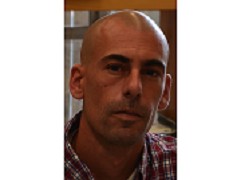
Profile of Ignacio Sancho-Martinez
I am currently a Research Associate at the Salk Institute for Biological Studies in La Jolla. During my studies in the University Oncology Institute of Asturias and the German Cancer Research center in Heidelberg (Germany) I focused on the understanding of DNA repair mechanisms and the signaling networks controlling human Glioma progression, spinal cord regeneration and brain repair. I was able to unravel the molecular mechanisms underlying basal Glioma cell infiltration and describe three independent signaling pathways triggered by the death-receptor CD95/Fas. My results led to several publications in high-profile journals as well as several patents, one of them currently in Phase II clinical trials (APG101 for the treatment of human Glioblastoma). It was however increasingly apparent to me that traditional biochemical strategies, or even the development of cancer therapies, were not specifically focused on the targeting of cell populations with stem cell properties, the major reason why I decided to move forward with my postdoctoral studies in stem cells and reprogramming at the Salk Institute. After several years as a postdoc, I find that merging my previous background with the knowledge I have acquired in stem cells and cell identity fate, or “reprogramming”, positions me in an outstanding situation to study the mechanisms driving cancer stem cell formation, benign stem cell differentiation, tissue regeneration, the mechanisms of cell reprogramming as well as the molecular mechanisms defining the boundaries between cancer and adult tissue stem cells. Indeed, my research is helping to give us a glimpse of the molecular basis underlying during organ regeneration in higher vertebrates, the differentiation of human stem cells into various tissues, and somatic cell reprogramming. Indeed, I have currently unveiled the dormant mechanisms underlying adult mammalian heart regeneration and established methodologies for their experimental activation. In vivo activation of conserved regenerative pathways sufficed for the healing of the injured mammalian heart. Most notably, I reasoned that previous attempts at generating renal lineages upon differentiation of human stem cells might have fail due to the complex macrostructure that the kidney represents, the interaction of different cell populations during kidney development and ultimately, our inability to recapitulate fundamental developmental signals in vitro. Based on this reasoning I deduced that the establishment of 3D organ cultures in vitro might facilitate the generation of renal lineages upon human stem cell differentiation, results published in Nature cell Biology and selected by Science as one of the Top 10 Runners Up for Breakthrough of the year 2013. Overall, I am well versed with all the techniques and methodologies described in this application and are confident that we can successfully carry out the proposed experiments.